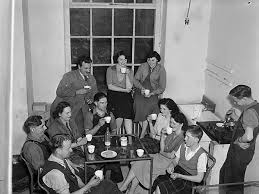
I’ve played both parts, about 10 years apart, in the following little playlet:
Enthusiastic music student approaches band member in the interval or afterwards. “Loved the way you guys reharmonised the bridge on chorus seven; the unorthodox dynamics in the codetta; the way you quoted Ligeti during that Benny Golson tune…” “Did we really do all that? Wow. Okay, if you say so. Glad you liked it. Thanks. Come over and join the guys.”
Incidentally, a guy came up on the gig the other week and said he loved how I quoted snippets from film themes – I wasn’t aware I had, and some of the films he mentioned I hadn’t even seen. Rock and roll, baby.
Point is that your influences are going to come through when you play, but whatever you play will hit the listener through the filter of their influences as well. And of course, there’s nothing new under the sun. Play or write anything and someone’s always going to say “oh, it sounds like X or Y”, particularly in improvised music. Critics are particularly prone to “it’s a bit like”-itis… I once got compared to Herbie Nichols by – no prizes for guessing, somebody who’d recently been listening to a lot of Herbie Nichols.
Anyway, back to our eager acolyte who joins the band at their table, and is looking forward to fascinating discourse about bitonality, artistic expression, gossip about gigs with famous players and fingering techniques. Only to find that the conversation revolves around remortgaging deals, the kids’ worrying exam performance and the football results.
Of course, music is a passion – it has to be, because we’re certainly not in it for the money. And it’s great that a keen student is listening and thinking in such a detailed way. And people do sometimes talk about work during their break or after the hooter’s gone, especially co-workers.
Musicians are generally supportive and encouraging. You’ll get a kindly soul to give you some thoughts on where to substitute 7#11 chords or something like that. But a salesman doesn’t generally go home and obsess over performance figures during dinner (at least not out loud). Musicians are also people with lives, and the heartache and the thousand natural shocks that flesh is heir to. People aren’t, you know, always on duty. We don’t talk shop all the time.
You are what you are, you are not what you do.
When you embrace that idea, you will actually become better at what you do.


 Jason Lyon Music
Leave a reply to btlrestaurant Cancel reply